
How We Work on Electrical Jobs
How an electrician sizes up a job, the safety and code rules the work follows, and a quick way to tell how urgent your problem is.
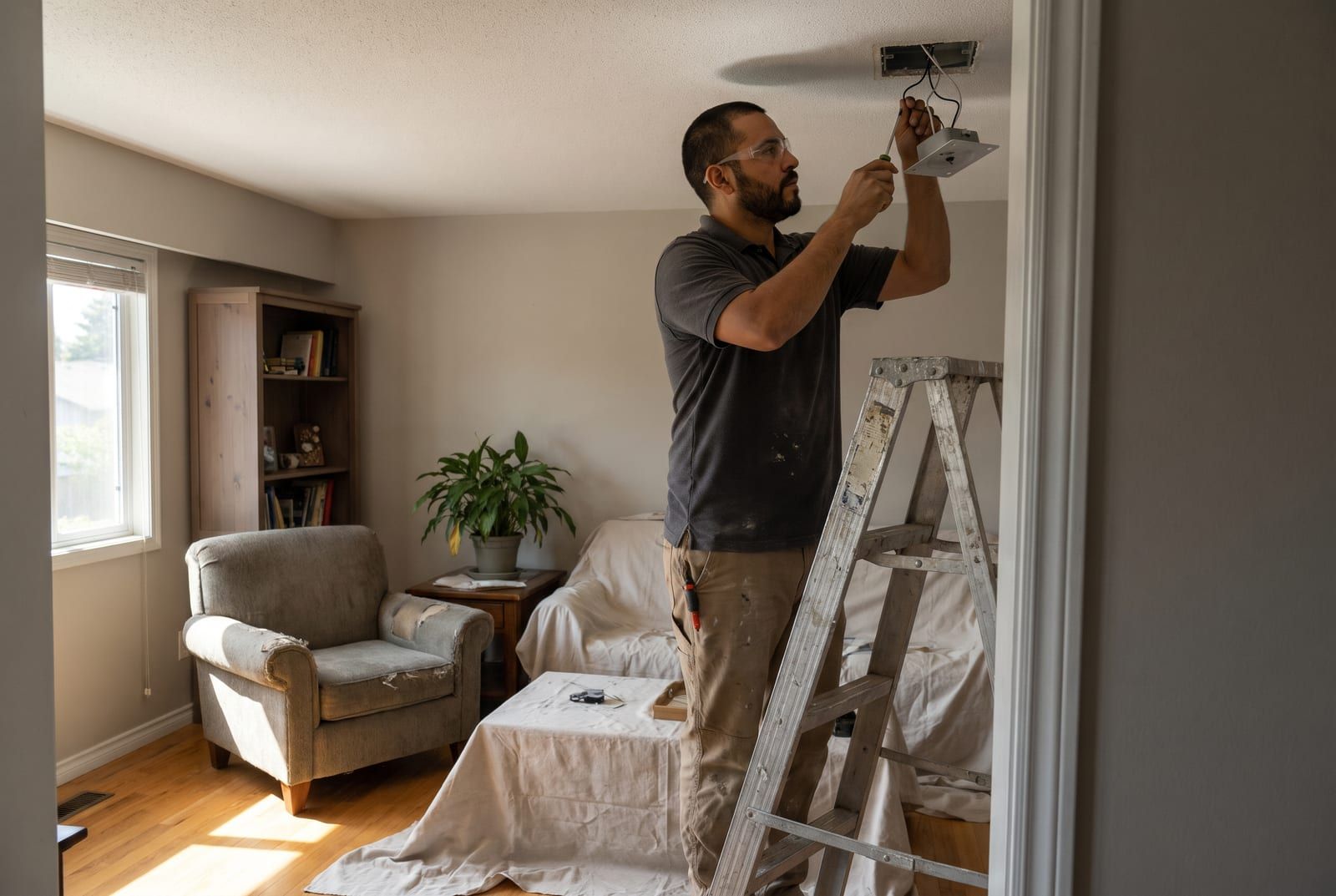
Whether it’s a breaker that won’t reset or a new panel, electrical work follows the same order: understand the problem, look at the system, test, then decide what the job really is. Skipping a step is how the visible symptom gets fixed while the cause stays in the wall. Here is how that sequence usually goes, and what the California Electrical Code expects along the way.
How a Job Gets Assessed
- Talking through the problem. What happened, when it started, what was running at the time, and which rooms are affected. A good description often narrows the search to one circuit before anyone opens a cover plate.
- Inspecting the panel, circuits and fixtures. The panel shows the condition of the breakers, the wire sizes on them, and signs of heat or moisture. From there it’s the outlets, switches and fixtures that share the circuit.
- Testing. Voltage and continuity readings along the run show where power stops or a connection is failing. For planned work, a load calculation tells whether the panel can carry what you want to add.
- Deciding the scope. With the cause found, the job is defined: a repair at one point, a new circuit, a panel upgrade, or a larger piece of rewiring. You know what’s involved before the work starts.
What Gets Looked At First, by Type of Job
| Type of job | What is looked at first | Usual code or permit consideration |
|---|---|---|
| Repair | The affected circuit: which breaker feeds it, what else is on it, and the connections at each outlet, switch and fixture along the run | Replacing a device like for like rarely needs a permit; new wiring or a changed circuit can |
| Panel | The panel’s age and condition, the service size, the breakers and their wire sizes, grounding and bonding, and a load calculation | A permit and inspection, and the utility’s disconnect and reconnect |
| Lighting | Ceiling framing, attic access, box ratings for fans and heavy fixtures, existing switching and dimmer compatibility | Title 24 energy rules for new and remodeled lighting; a permit when new circuits are added |
| EV charger | Panel capacity and open spaces, the distance and route to the parking spot, and the car’s charging rate | A permit and inspection for the new 240-volt circuit; GFCI protection for garage outlets |
| Rewiring | The type and condition of the existing cable, access from the attic and crawlspace, grounding, and how circuits are divided | A permit and inspections, often a rough-in check before walls are patched; AFCI and GFCI protection on the new circuits |
Safety Rules Electrical Work Follows
- Power off and tested before work. A breaker label isn’t proof. The circuit is switched off and tested dead at the point of work with a meter.
- Correct wire and breaker sizing. Each breaker protects the wire on it. A 20-amp breaker on wire made for 15 amps lets the wire overheat before the breaker trips.
- GFCI and AFCI protection where required. GFCI in kitchens, bathrooms, laundry areas, garages, crawlspaces and outdoors; AFCI on most living-area circuits in new and extended wiring.
- Smoke and CO alarm rules. Smoke alarms in each bedroom, outside sleeping areas and on every level; carbon monoxide alarms in homes with gas appliances, a fireplace or an attached garage. New and remodeled work calls for hardwired, interconnected alarms with battery backup.
- Grounding and bonding. The service is grounded to the earth, and metal water and gas piping are bonded, so a fault has a safe path and trips the breaker instead of energizing a pipe.
The California Electrical Code, Permits and Inspections
Electrical work in California follows the California Electrical Code, which is based on the National Electrical Code with state amendments, and the state’s energy code, Title 24, for lighting and some equipment. Permits are issued locally. Inside city limits that’s the City of Sacramento; in unincorporated areas such as Carmichael it’s Sacramento County; and cities such as Elk Grove, Folsom, Roseville, Citrus Heights, West Sacramento and Davis run their own building departments.
As a rule, new circuits, panel and service changes, EV chargers and rewiring need a permit and an inspection, while replacing a device like for like usually doesn’t. Where an inspection applies, the inspector checks the work, and for service changes the utility reconnects the power once it’s approved. If you’re unsure whether your job needs a permit, ask when you call. More answers are on the questions page.
Symptom Troubleshooter
Pick what you’re seeing to find out whether it’s a call-now, call-soon or keep-an-eye-on-it situation, and what to do in the meantime.
Choose a symptom above, then press “Show What to Do.”
Not Sure How Urgent It Is?
Describe it to us on the phone or when you schedule, and we’ll tell you how soon it should be looked at.