
Electrical Repair and Troubleshooting in Sacramento
When something stops working, the job is to trace the fault back to its source and fix that, not just the symptom you can see.
Tracing a fault back to its source is the work Neil Edwards started Capitol Electric to do, and it’s still the heart of most repair calls. A dead outlet in a bedroom might be caused by a loose wire two rooms away. A breaker that trips every evening might be fine on its own and simply carrying the kitchen, the dryer and a space heater at once. Fixing the visible problem without finding the cause usually means another call a few weeks later.
Signs Something Needs Attention
Electrical problems tend to announce themselves before they fail outright. Call when you notice any of these:
- Outlets that have stopped working, or work only when a plug is wiggled
- Breakers that trip repeatedly, or a GFCI that won’t reset
- Lights that flicker, dim when an appliance starts, or brighten for no reason
- A burning or hot-plastic smell near an outlet, switch, fixture or the panel
- Buzzing, crackling or sizzling from a wall, switch or outlet
- Cover plates that feel warm, or discoloring around an outlet
- Mild shocks from a switch, appliance or faucet
What We Look At on a Repair Call
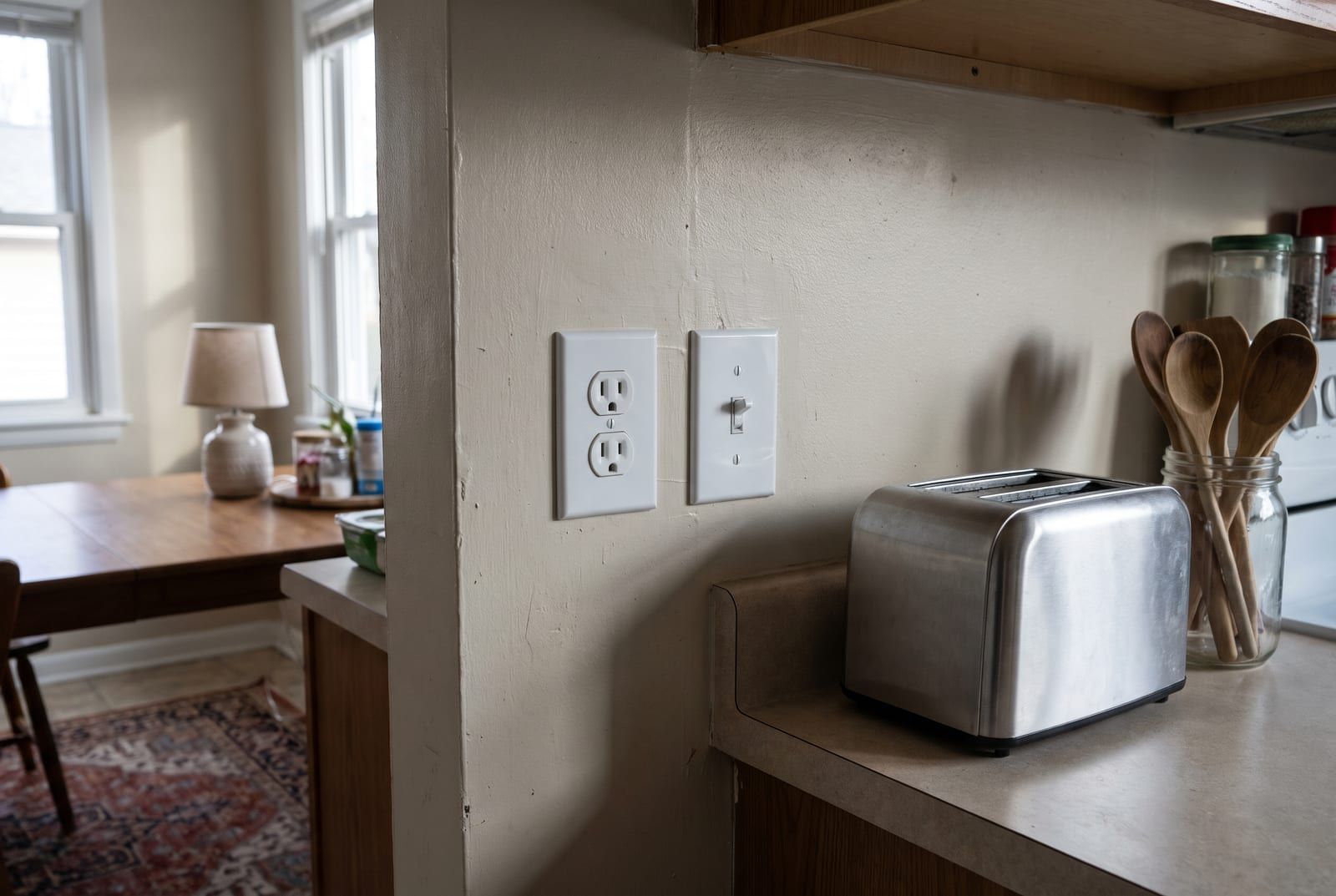
A repair visit starts with your description: what happened, when it started, and what was running at the time. From there the work is methodical. We check the panel and the breaker for the affected circuit, find which outlets, switches and fixtures share it, and test along the run until the voltage reading changes. Loose terminal screws, back-stabbed connections that have worked loose, overheated insulation and worn devices are the usual culprits in older Sacramento homes, and in newer houses a failed GFCI or AFCI device is common.
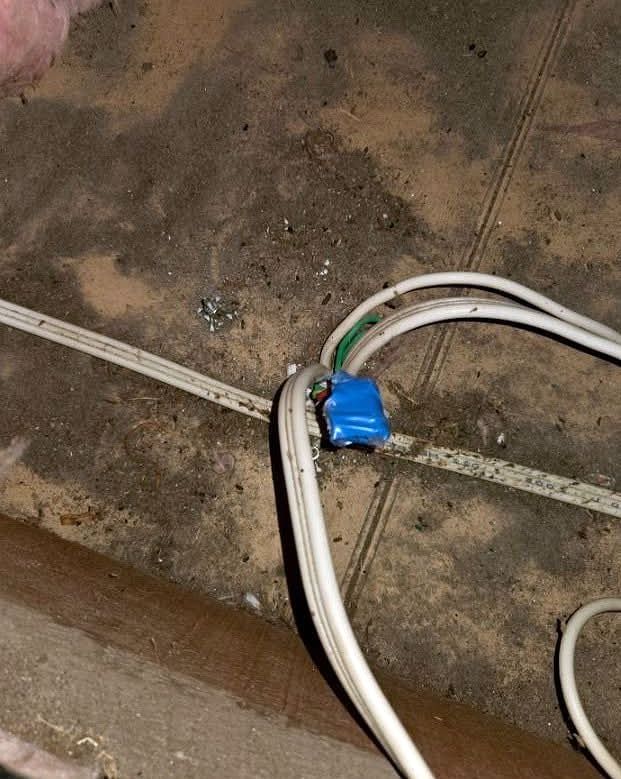
Not every fault is old age. Rodents chewing on cable in an attic, a nail driven through a wire during a picture hanging, or a fixture installed with a bulb hotter than it is rated for all show up on repair calls too. Once the cause is found, the repair is made at that point, and the device you first noticed is replaced if it was damaged along the way.
Symptoms, Causes and What to Do Until We Arrive
| Symptom | Possible causes | What to do until we arrive |
|---|---|---|
| Outlets not working | A tripped GFCI upstream, a loose connection at another outlet on the same run, a worn receptacle, a tripped breaker | Press the reset on nearby GFCI outlets once. Leave the dead outlet alone and plug things in elsewhere. |
| Breaker trips again and again | Too much on one circuit, a damaged cord or appliance, a short or ground fault in the wiring, a worn breaker | Unplug what was running when it tripped. Reset once. If it trips again with nothing plugged in, leave it off. |
| Lights flicker or dim | A loose bulb or connection, a large appliance starting on a shared circuit, a failing dimmer, a loose neutral | Note when it happens and which lights. If many rooms flicker together or lights brighten oddly, call right away. |
| Burning smell | Overheated wiring, a failing outlet or switch, a fixture with the wrong bulb, an overheating appliance | Turn off that circuit at the panel if you can do it safely. If you see smoke, leave and call 911. |
| Buzzing or crackling | A loose connection arcing, a worn switch or dimmer, a breaker that isn’t seated | Stop using that switch or outlet. Turn the circuit off and keep the area clear. |
| Warm cover plate | A loose terminal screw, an overloaded receptacle, a worn device or a back-stabbed connection | Unplug everything from it and don’t use it until it has been opened and checked. |
Repair Questions
What should I do when a breaker keeps tripping?
Unplug or switch off what was running on that circuit, then reset the breaker once by pushing it fully to off and back to on. If it holds, plug things back in one at a time; the breaker that trips again when a particular appliance starts is telling you which load is the problem, or that the circuit carries more than it was sized for.
If it trips right away with nothing connected, leave it off. That points to a fault in the wiring or a device on the circuit, and resetting it again and again only adds heat and wear.
When should I switch the power off?
Turn off the circuit at the panel when you smell something hot or burning, hear buzzing or crackling from a wall, switch or outlet, see scorch marks, or feel a plate that’s warm to the touch. If the panel itself is hot, smoking or wet, don’t touch it; keep everyone away from it and call 911 if there is smoke or fire.
If you can’t tell which breaker feeds the problem and the panel directory is blank or out of date, it’s safer to leave the panel alone and call us than to start switching breakers at random.
Why does a whole room go dead when only one thing seems wrong?
Outlets and lights on a circuit are wired one after another. A loose connection at one outlet can cut power to every device beyond it, which is why the fix is often found in a different room from the one that went dark.
Can a flickering light be just the bulb?
Often, yes. Try a new bulb of the right type first, and with LED bulbs on a dimmer, check that the dimmer is rated for LEDs. If the flicker follows when a big appliance starts, or several rooms flicker at once, it’s worth having the wiring looked at.
Breaker Won’t Stay On? Outlet Gone Dead?
Tell us what’s happening and when it started, and we’ll set a time to find the cause.